
Your EV can
power your house.
Vehicle-to-grid (V2G) turns the biggest battery you own — the one in the driveway — into part of your home’s energy system. It’s new, it’s coming fast, and the hardware is installable today.
We call you back the same business day — requests after 3pm get a call by mid-morning next business day.
The idea
Charging that flows both ways.
Every charger you’ve ever seen pushes energy one way: grid to car. V2G hardware is bi-directional — the car can also discharge, powering your home (vehicle-to-home, V2H) or supporting the grid (vehicle-to-grid, V2G) when energy is scarce and expensive. Instead of a passive load, your EV becomes an active energy asset.
A day with V2G
Sunshine in, kilometres and kilowatts out.
Sunshine in
Your solar charges the car through the day — energy that would have been exported for cents goes into a battery several times larger than any home battery.
Evening out
When the sun drops and grid prices spike, the car gives some of it back — running your home from the driveway (that’s the “V2H” part).
Grid support
With a V2G-capable car and retailer, surplus can flow to the grid at peak prices — your commute becomes an energy asset.
Full by morning
The charger tops the car back up on cheap overnight rates, and you leave with the range you need. The cycle repeats.
Why it matters
The numbers behind the excitement.
The battery you already own
A typical EV holds 60–100 kWh — five to eight times a typical home battery. Most of it sits parked and full. V2G puts that capacity to work.
A buffer against price spikes
Peak evening electricity is the most expensive power you buy. Discharging a few kilowatt-hours from the car each evening takes the sting out, every day.
Blackout resilience
Vehicle-to-home means a powered fridge, lights and Wi-Fi when the street goes dark — from a battery that recharges itself at the supermarket if it has to.
The hardware, today
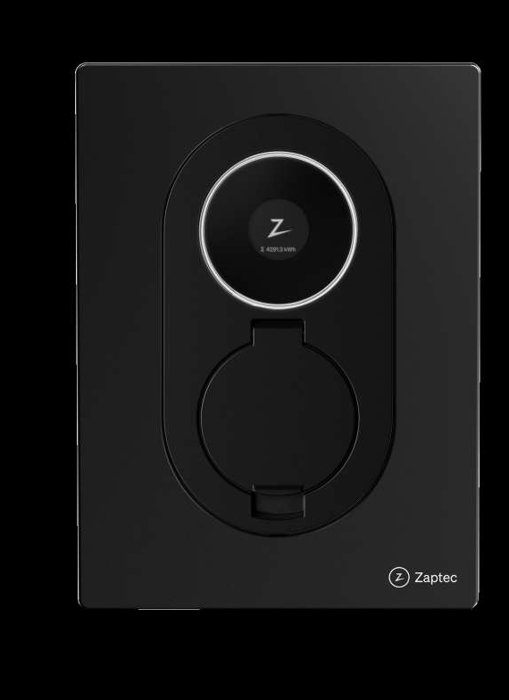
Zaptec Go 2 — the V2G-ready flagship we install.
Zaptec Go 2
Engineered in Norway, a pioneer in bi-directional charging. Sleek enough for the front of the house, serious enough to run it.
What makes it V2G-ready
- Bi-directional hardware supporting the ISO 15118 standard — the global language of V2G
- 7 kW single-phase or 22 kW three-phase with dynamic phase switching
- Built-in solar integration and energy display, app control, OCPP smart management
- IP54 weather-rated, IK10 impact-rated, 5-year warranty
Straight talk: full V2G operation in Australia also needs a bi-directional-capable car and the final ISO 15118-20 rollout, which is under way now. That’s exactly why “V2G-ready” matters — install it once, and you’re ready the day your car and retailer are. Until then it’s simply a superb solar-integrated smart charger.